A day in the Barossa

DSCN0654.JPG

James had suggested before I came out that we should spend the Sunday visiting the Barossa Valley, one of Australia’s most iconic wine regions and just outside Adelaide and I had agreed this was a good idea.  I had been very conscious that I had in Tasmania, the Yarra Valley and the Mornington Peninsula, regretted not having set aside more time to visit wineries and sample wine, so when my last day in Australia arrived I was very happy that that is what we were going to do.

We started at Penfolds Magill Estate, only a few minutes from James’ house.  Penfolds is one of Australia’s largest wine companies and we used to drink a lot of their wines before the price shot up as they enjoyed success in the Chinese market.  The Magill Estate tasting room was very impressive, with displays of their wines (including many vintages of the iconic Grange, possibly Australia’s finest wine) and exhibits relating to the history of the company.  Private tasting rooms were very smartly appointed but I tasted at the public tasting bar.  The young bloke who gave me my tasting was both impressively enthusiastic and knowledgeable and the wines I tasted (8, I think) were very impressive.  Interestingly, many of them were unavailable in the UK (several only being available at the Cellar Door).  I was particularly impressed by a delicious Adelaide Hills Riesling and a couple of local Pinot Noirs, sufficiently so that a Cellar Reserve Pinot made the trip home with me!

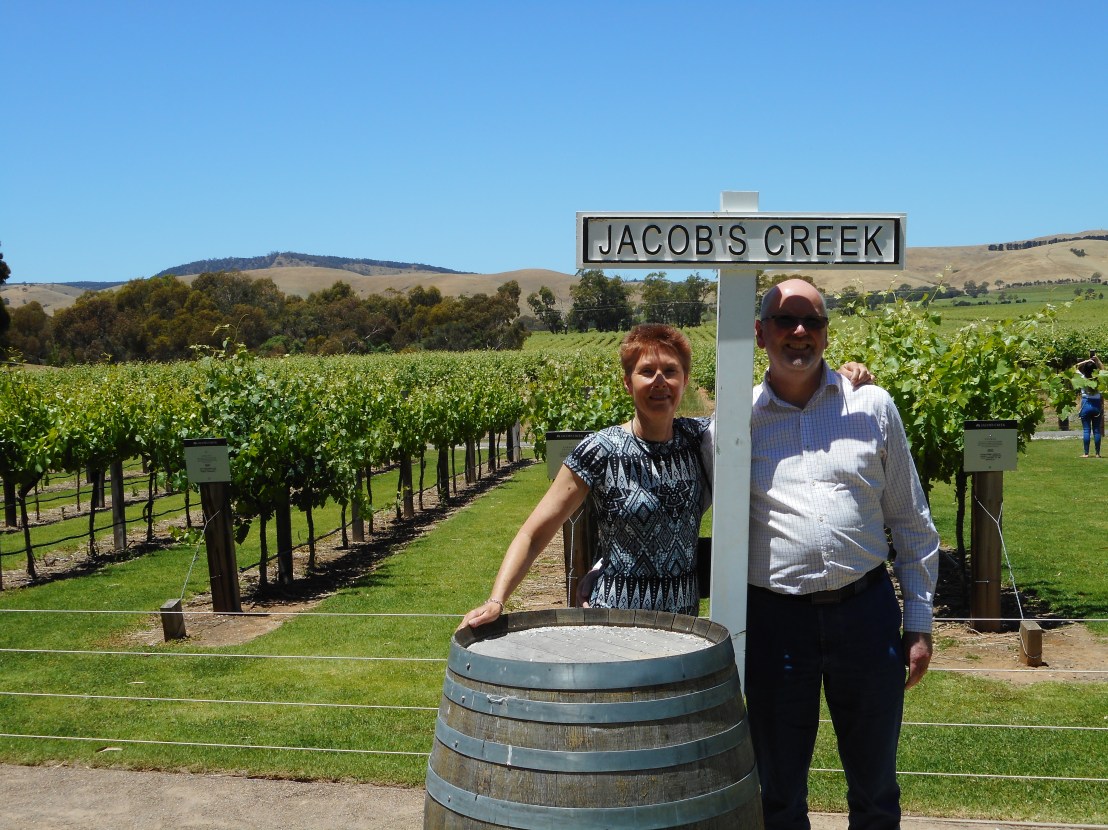
We went on up into the Barossa and to a rather different operation at Jacob’s Creek.  Ultimately owned by Pernod Ricard, Jacob’s Creek proclaims itself as Australia’s biggest wine brand and whilst Penfolds targets a premium market, Jacob’s Creek aims very much at the mass market.  The visitor centre was, again, impressive and was very busy.  Again, I took a tasting.  Despite the mass market positioning of the wines they were good, if lacking the interest and absolute quality of the Penfolds wines tasted earlier.DSCN0653.JPG

James and Bev at Jacob’s Creek

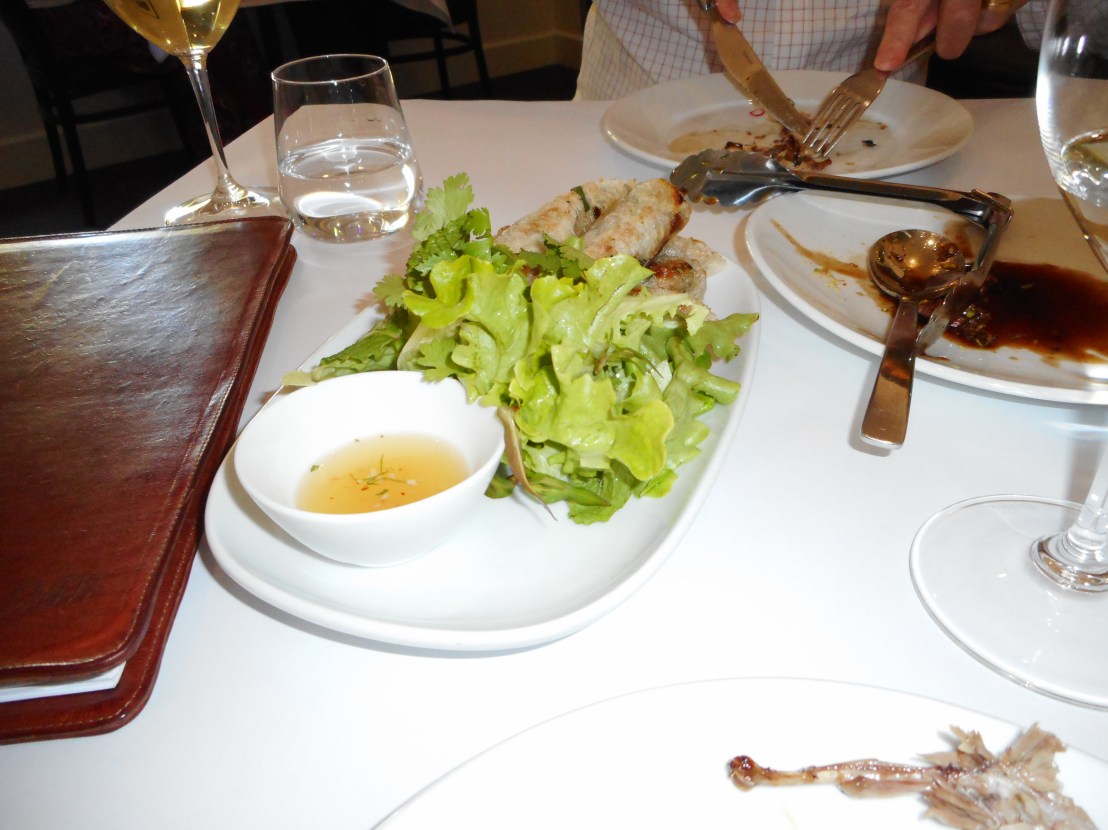
We headed on to the town of Tanunda, where we were booked in for lunch at Ferment Asian, a south east Asian restaurant with a fantastic wine list.  We enjoyed a simply delicious lunch, with several very good glasses of wine.DSCN0655.JPG

After lunch, we visited one more winery, Seppeltsfield, best known for its sweet and fortified wines.  I tasted four fortified wines, matured in a solero system , two were very like sherry (one a fino style, the other sweeter and more like a PX sherry) and the others were a Grand Tokay and a Muscat, both wines for which they are well known.  I then went on to try three different tawny ports.  Australian tawny ports (of course we can’t call them port in Europe!) are a unique style and largely unavailable in the UK.  The best of these, the 1987 Para Liqueur Tawny was sufficiently good that, again, a bottle made its way home with me.

From there, we drove back to Adelaide at the end of a very enjoyable day indeed.  There’s no doubt that next time I visit Australia I will dedicate rather more time to wine!

My last Golf In Australia

DSCN0625.JPG

James had invited me to play with him at Royal Adelaide.  There was a shotgun start, to be followed by a lunch at which the presentation of trophies for the recently completed season (RA has a winter season) would be made.  As with all the golf I had played this month I had avoided reading much about RA in advance.  I wanted to be able to form my own opinion of each of the courses I played.  I knew RA was quite highly rated in Australia but it is certainly not as well known in the UK as Royal Melbourne, Kingston Heath, NSW and the Barnbougle courses.  It turned out that I was in for a treat.

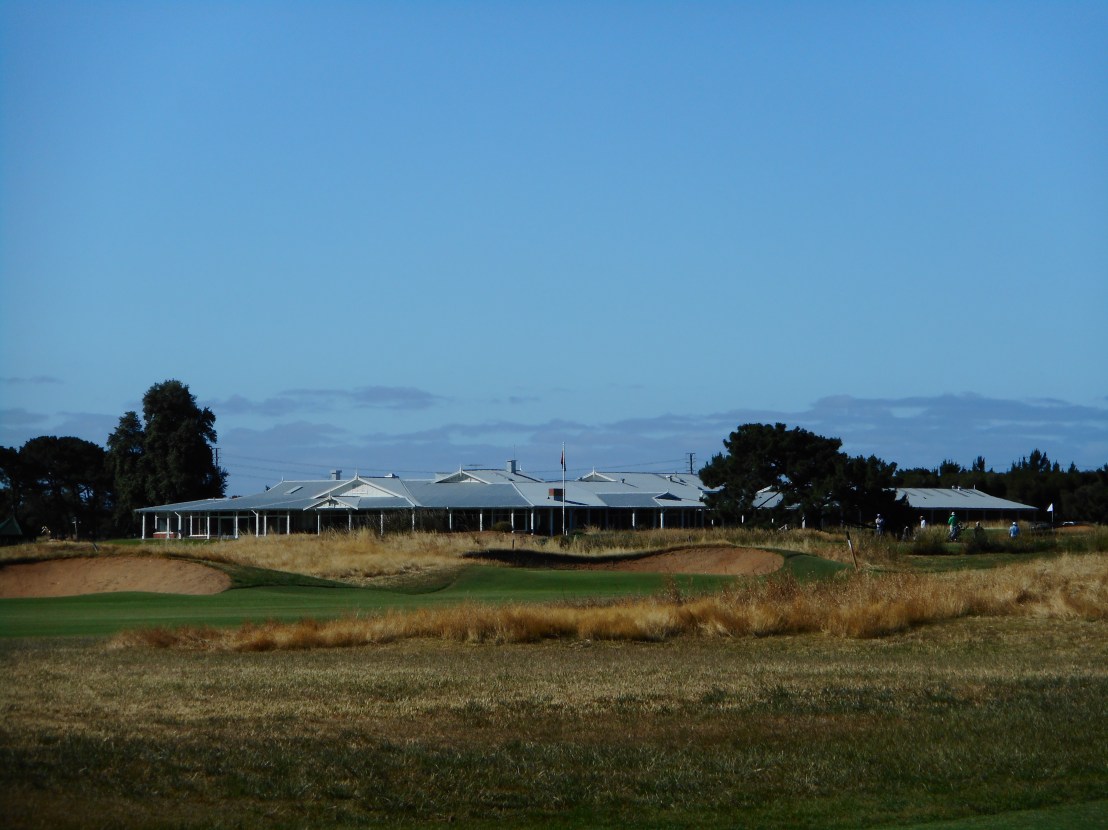
We started on the short par 4 3rd, which was fortunate as the tee is right by the clubhouse.  RA has a single story clubhouse, which, whilst a very new building has the same profile as the older clubhouse it replaced.DSCN0616.JPG

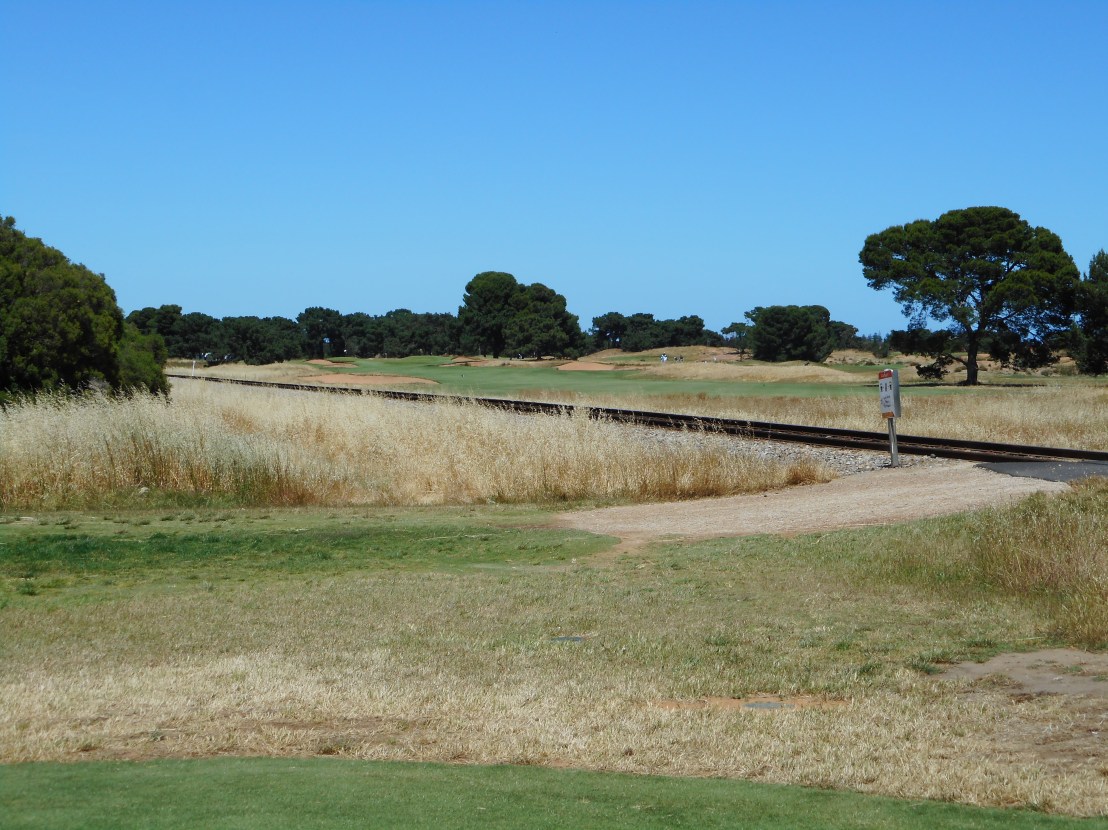
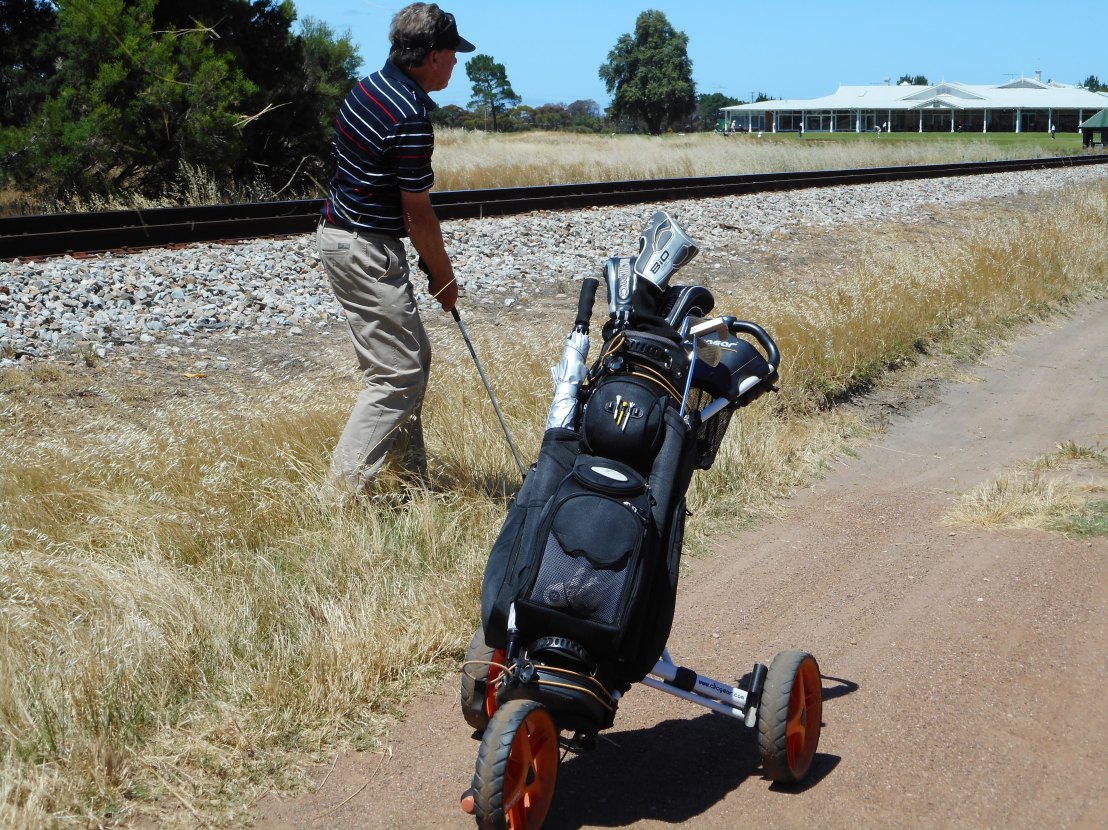
It is also notable for the fact that a single railway track runs through the course, immediately next to the clubhouse.  Indeed, the clubhouse used to have its own station for golfers!  As with all the courses I played in November I deliberately did not read too much about RA before playing it.  I wanted to form my own opinion, rather than be too influenced by those of others.  I knew it was quite highly rated and had been warend about the thickness of the rough after the wet summer which Adelaide, along it seems withn most of Australia, had suffered.

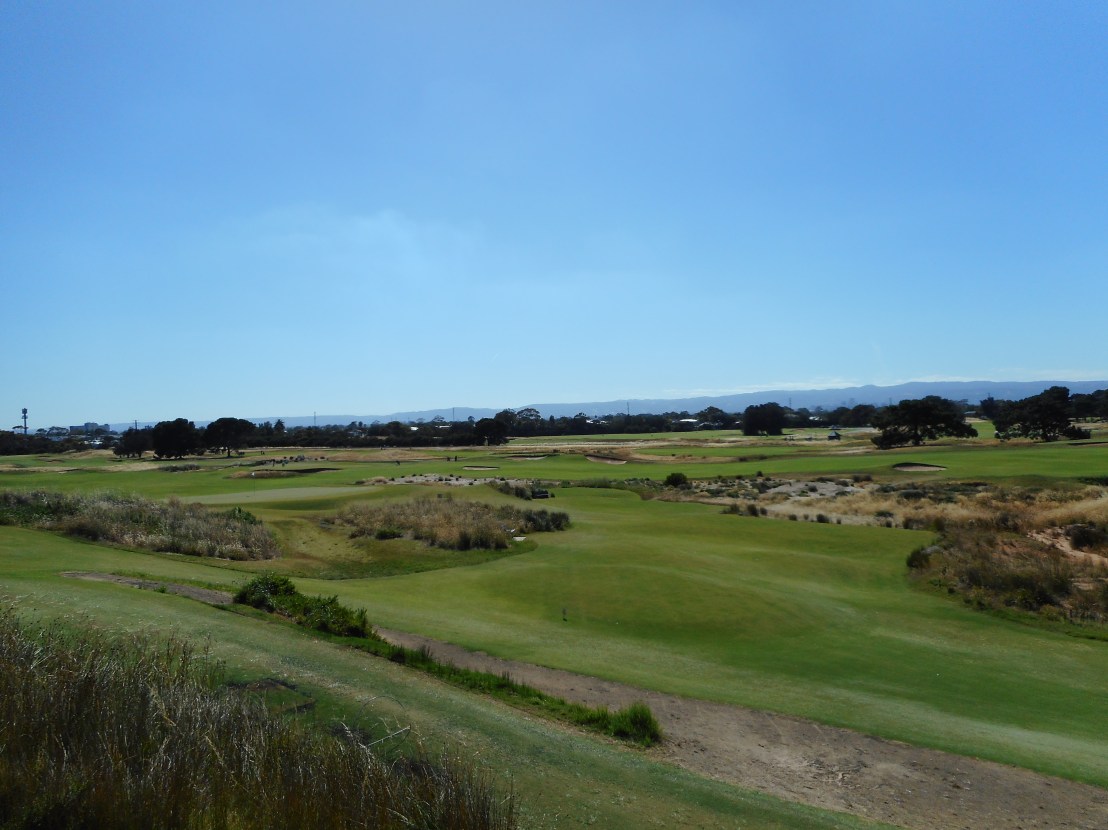
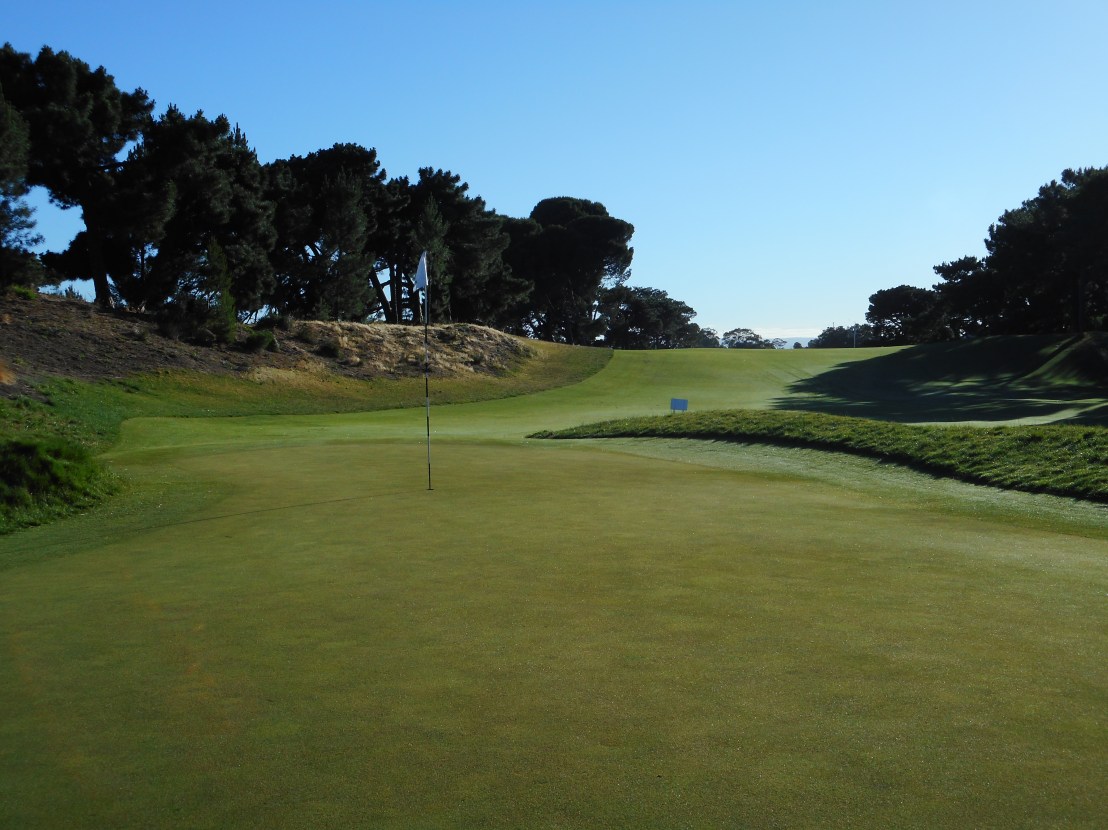
My first impression was one of space.  Compared to Glenelg on Friday, RA appeared to have a lot of space.  Encouragingly, as we approached the clubhouse, the land seemd to have enough movement without being too dramatic.  The third is a very good hole and a tough one to start with.  A blind drive plays over a ridge but the green is driveable by long hitters.  The entrance to the green, however, and the front part of it (where the flag was on Saturday) is tiny, requiring great precision, even with a short pitch for an approach.  Missing pin high leaves a very difficult up and down for birdie and puts bogey in play.DSCN0611.JPG

The 3rd green from behind.

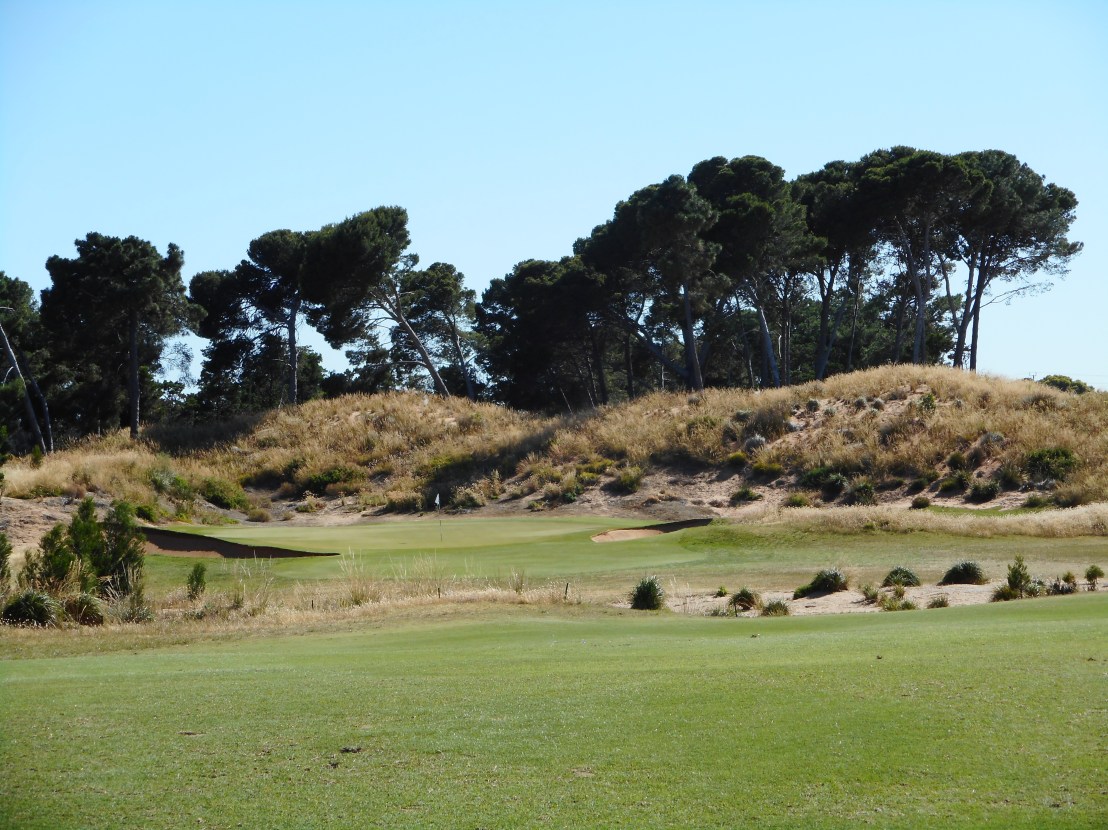
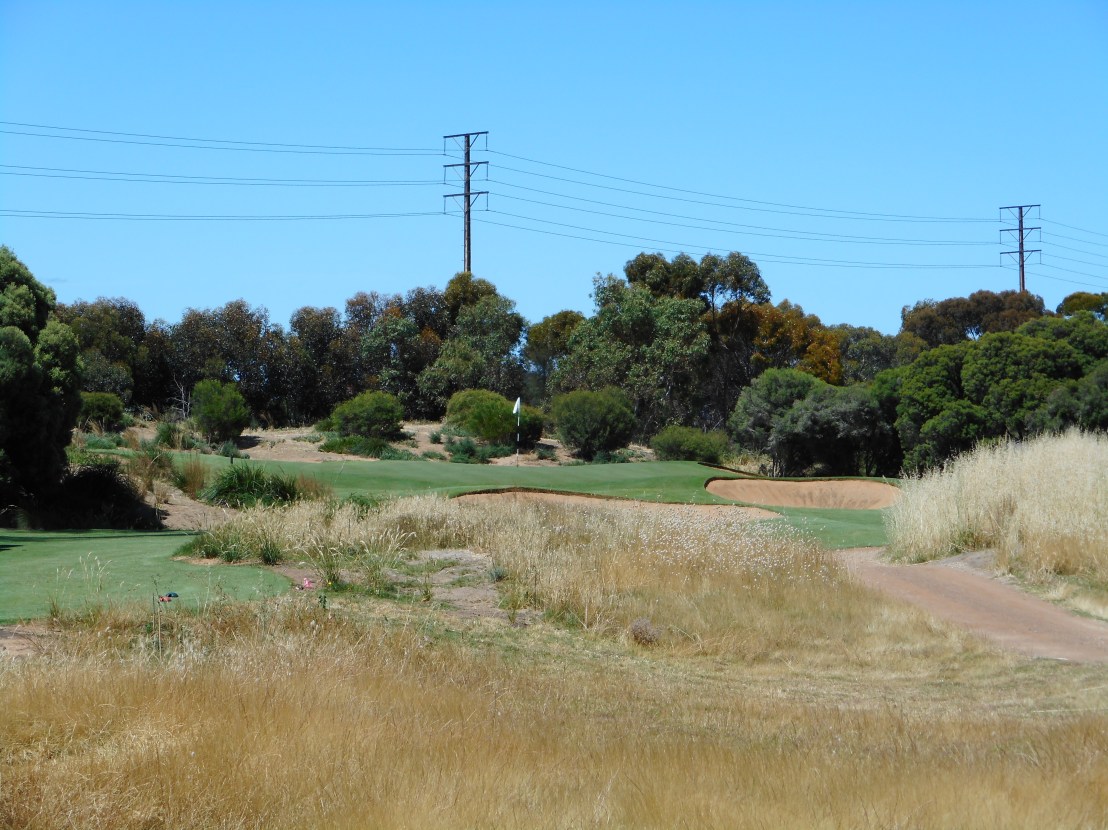
I really enjoyed RA.  In fact, I would go so far as to say that the whole package is a better course than most of the sandbelt courses in Melbourne, other than Kingston Heath and the courses at Royal Melbourne, which means it is very, very good indeed.  The greens are not dramatic but each one slopes enough to make it treacherous and there is a definite benefit to being on the right side of the hole.   There is also a real advantage to hitting the right part of the fairway.  The course has a number of very good holes, among them the “Crater Hole” 11th:DSCN0623.JPG

The 11th approach

The railway comes close to play on the 2nd (the 17th hole we played)DSCN0635.JPG

As David, one of our playing companions demonstrates:DSCN0637.JPG

As part of this round the club’s new 19th hole (many Australian clubs seem to have 19 holes, so that one hole can, at any time, be taken out of play for maintenance work)DSCN0634.JPG

The new 17a

After we finished and showered, we sat down for the club’s end of season presentation lunch.  A very enjoyable lunch, during which the strong connections between Adelaide and the wine industry became clearer, several winners were in the wine trade and at least one very well known winemaker was at the lunch.

A day at the Test

DSCN0606.JPG

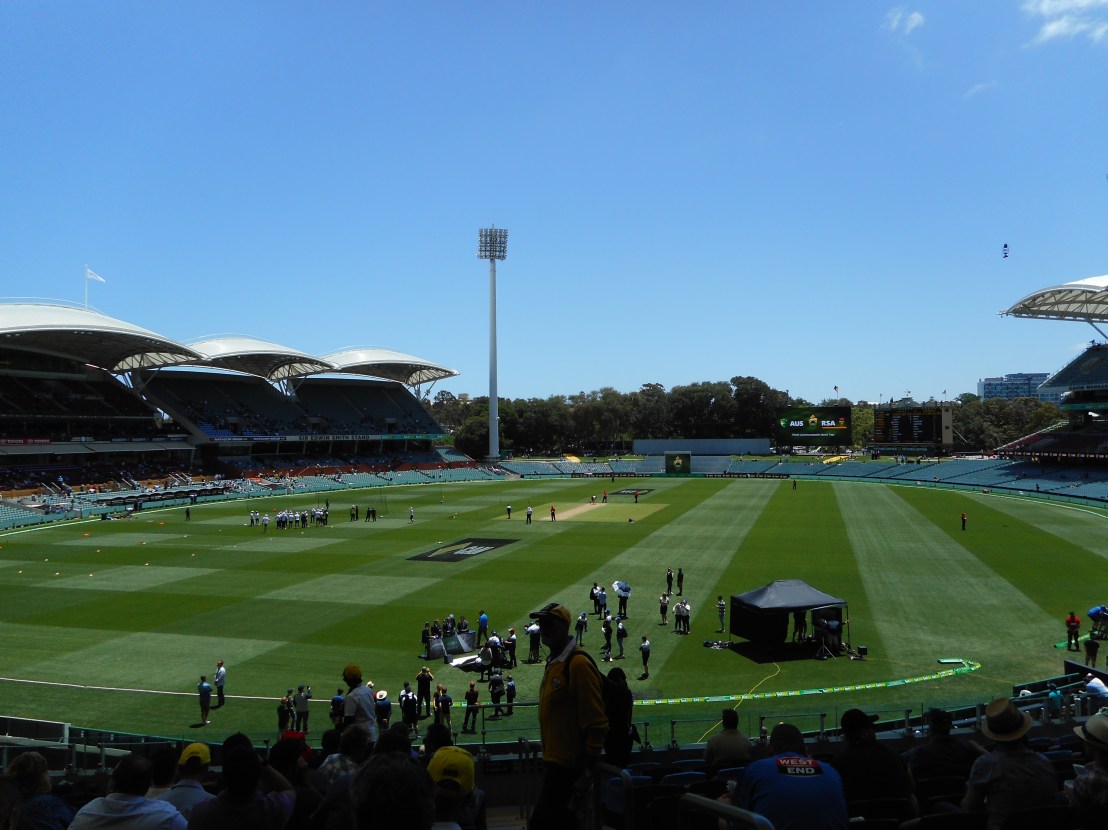
When I started planning this journey around Australia I had noticed that the last weekend of my time here would coincide with the third test of Australia’s three match test series against South Africa.  This was to be the second day/night test in Australia, with play starting after lunch and continuing into the evening under lights.  The first day/night test had been played at the Adelaide Oval and had been a thrilling, if short, encounter between Australia and New Zealand, with Australia scraping home thanks to a controversial (read incorrect) decision by the TV umpire.  The day/night test against the Proteas was also being played in Adelaide and I had planned my trip so as to arrive in Adelaide for that weekend and spend a couple of days watching the cricket.  James had, very kindly indeed, arranged for me to go with one of his neighbours, who was a member of the Adelaide Oval.

Before the cricket, Andrew, who was my host at Metro, had arranged for me to play golf at Glenelg with his cousin David.  As I was going to the cricket and David had a lunch in Adelaide, we had agreed to play early, though, as it turned out, there was some confusion as to exactly when!  I arrived at 6.30, believing for some reason that we had agreed a 6.45 tee time.  In fact we had agreed 6.30, so I changed my shoes and hit off.

David is a recently retired customs investigator and we were playing with his friend Grant.  Glenelg is immediately south of Adelaide airport and one of the better Adelaide clubs (and courses), built on red sandy soil.  It’s a smallish property, so the course is tighter than many of those I had played on this trip and asks a lot off the tee.  As it happened, I didn’t drive it badly and enjoyed the round a lot.  It’s another course where greens aren’t easy to hit in the right place and I noted again that I am yet to play in Australia with a bad bunker player.

DSCN0588.JPG

A fairly typical approach shot at Glenelg

After a quick coffee I dropped David off in the city for his lunch (an annual affair with former colleagues, I think he was expecting a long one!) and met James (who had been playing a match that morning at Royal Adelaide) at the airport, where I dropped my hire car off.  We had a bit of time before the cricket, so James took me to show me the coast.  Adelaide runs north/south as a city and has miles of beaches.DSCN0592.JPG
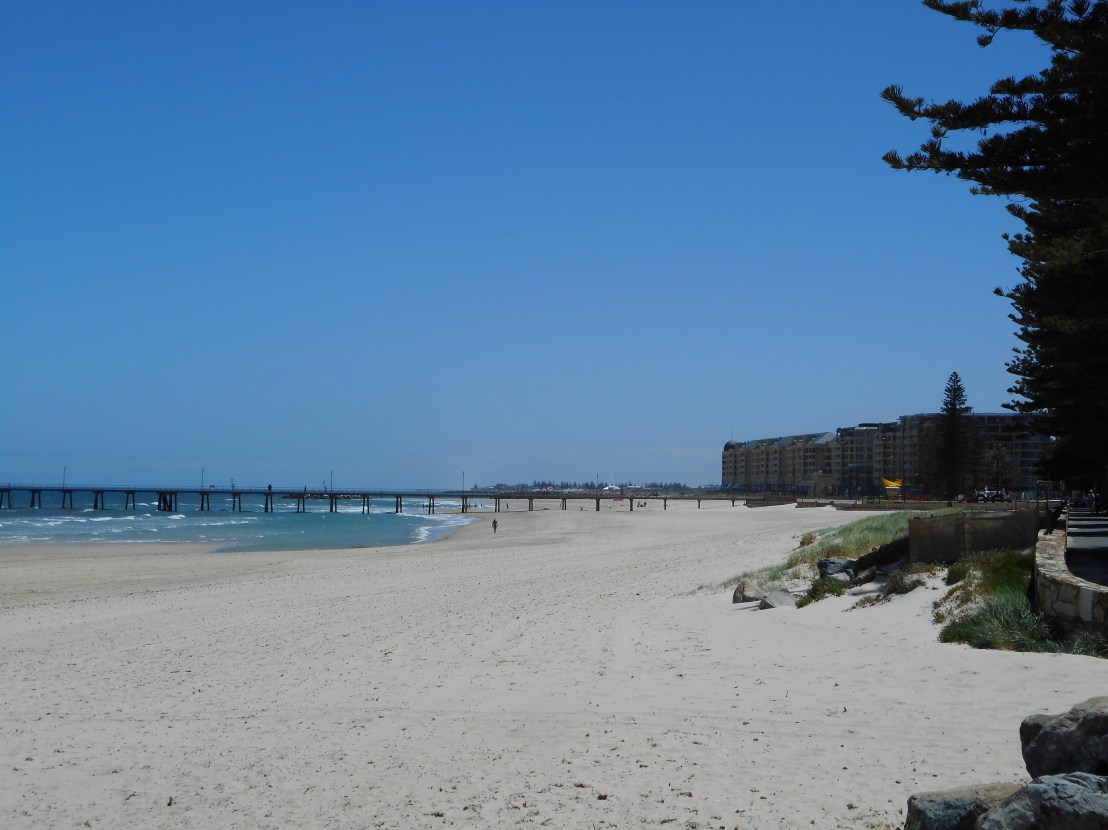
We then headed back into the city, where James dropped me off near the Adelaide Oval.  What I have seen of Adelaide so far has impressed me.  It is a very planned city, based on a US style grid, but the centre has a lot of open (and at this time of year very green) space.  The Oval is located near one of two municipal golf courses located centrally.

Like both the SCG and MCG the Adelaide Oval is a very modern and impressive stadium.  Again, like both of those, the development has been done with at least a nod to history.  At the SCG, the old pavillion has been preserved.  At the MCG the members area has been fitted with more than a nod to tradition.  At the Adelaide Oval the famous old scoreboard has been kept at the North End, which remains open, showing views of the city and features the famous Hill, though rather sadly that area is now seated, rather than being the grass slope it used to be.

Although built at different times, the Oval is a coherent and attractive structure.  From outside a feel for the design starts to develop:DSCN0595.JPG

I was early and had a stroll around the members area, from where I was able to get a good feel for the ground.DSCN0597.JPGDSCN0600.JPG
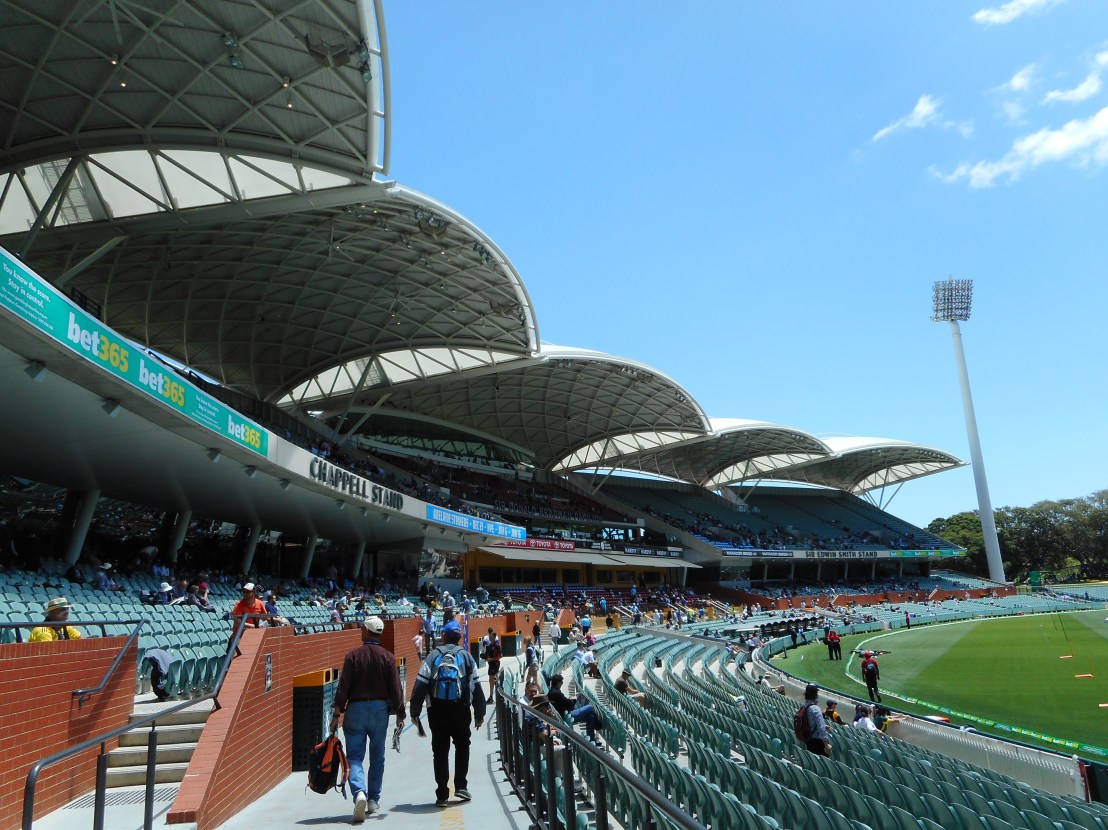
The Oval operates a system where members and guests can, on arrival, find a seat and reserve it.  James’ neighbour Brenton, who had let me use his second ticket, had arrived early and reserved excellent seats, just behind the bowler’s arm at the South End.  We were there for the second day of the final test of a three match series which Australia had already lost, performing dreadfully in the first two matches.  It had been fun to be in Australia at a time of widespread hand-wringing about the state of Australian cricket.  After two utterly limp performances and two shocking batting collapses (in the second test Australia had limped to 85 all out, having threatened to under-perform last year’s abject performance at Trent Bridge, there had been 6 changes to the squad for this match, with a number of younger players given their chance.

On day 1, South Africa had batted and their captain, Faf du Plessis, a pantomime villain over here after being caught using a mint to shine the ball in the second test, had made a hundred before declaring on 259-9 in order to have a bowl under lights at a time when the experienced Aussie opener David Warner was unavailable to bat having taken time off the field for injury.  Australian debutant Matt Renshaw (born in Middlesboro, great to see an Englishman helping the Aussies out) and makeshift opener Usman Khawaja had batted really well in testing conditions to survive a challenging period against the new ball.

On the second day we got to see an excellent innings from Khawaja, who went on to make a very good hundred, a very good one from Aussie captain Steve Smith, ended by a silly run out, and a skittish and unconvincing 50 from debutant Peter Handscomb.  A proper day’s test cricket.

At the Oval there is a large area behind the West Stand with bars and food outlets which was very busy throughout.  Several people told me that many people may come to the game and spend the entire time “out the back”, not seeing a ball bowled.  There were certainly a number of reserved seats in front of us which didn’t get much use!  The crowd swelled in the evening, reaching nearly 38,000.  I was impressed by how well the lights worked.  It does seem that the ball may move around a bit more than usual in the evening, against that the first, afternoon session, seems a good time to bat.  In England the morning session can be the hardest time to bat, I don’t see a problem with palying at a time that makes the last seeion slightly harder, so long as it is fair.  Certainly the experience of watching under lights, in a pretty full ground, was a very good one.DSCN0609.JPG

The old (and new) scoreboard at the Cathedral end as night arrives

To Adelaide

DSCN0576.JPG

I had been surprised in  Sydney to discover cafes open at 6.30 in the morning.  I was astonished on Wednesday morning at breakfast when I asked whet time the cafe would be open on Thursday to be told 6.30.  In Port Fairy, where a takeaway pizza had been the limit at 8pm the previous evening.  I planned an early start to update my blog but also to ensure I was not too late arriving in Adelaide.  The drive would be well over 6 hours and I wanted to stop in the Coonawarra wine region on  my way.

In fact, several of Port Fairy’s cafes were open and, much as I had enjoyed breakfast on Wednesday I elected to visit a different one (Banks & Co, for anyone visiting!)  I ordered a coffee and breakfast which turned out to be one of the best breakfasts of the trip.DSCN0574.JPG

Toast, poached eggs, bacon, sauteed potatoes, chorizo, a wonderful sautee of onions, peppers and chilli, green beans and fried tomato.

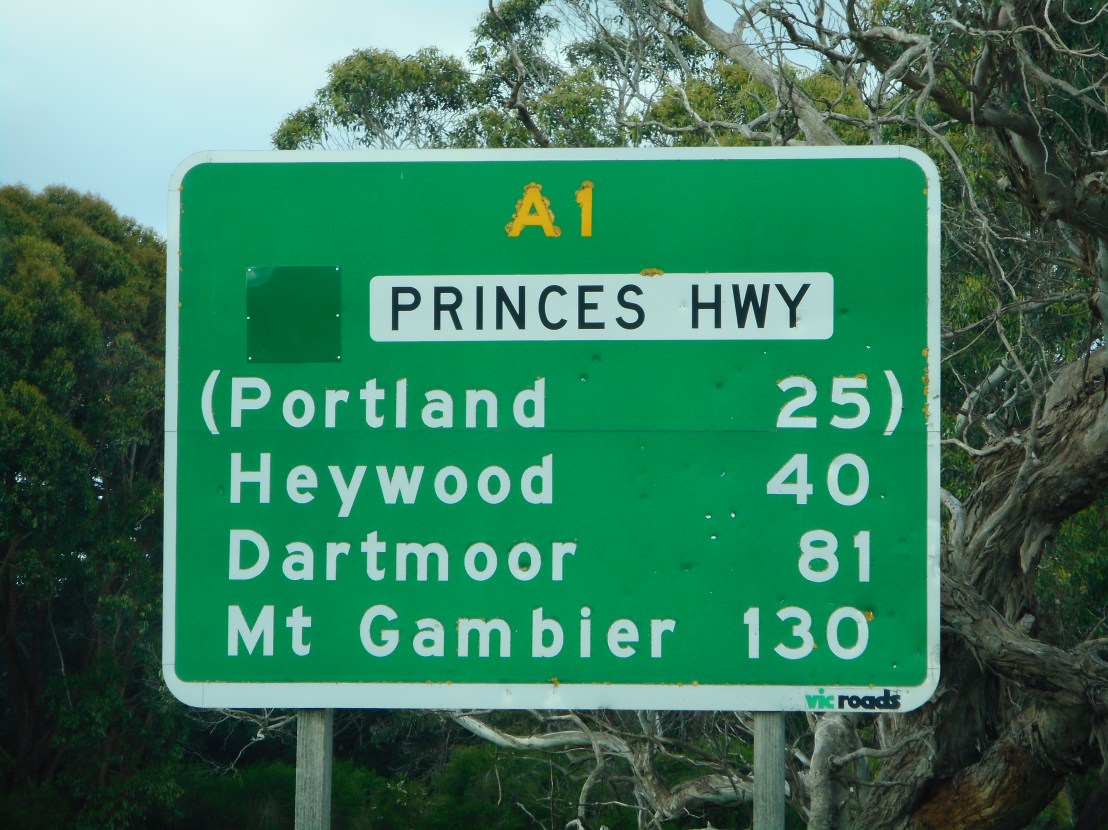
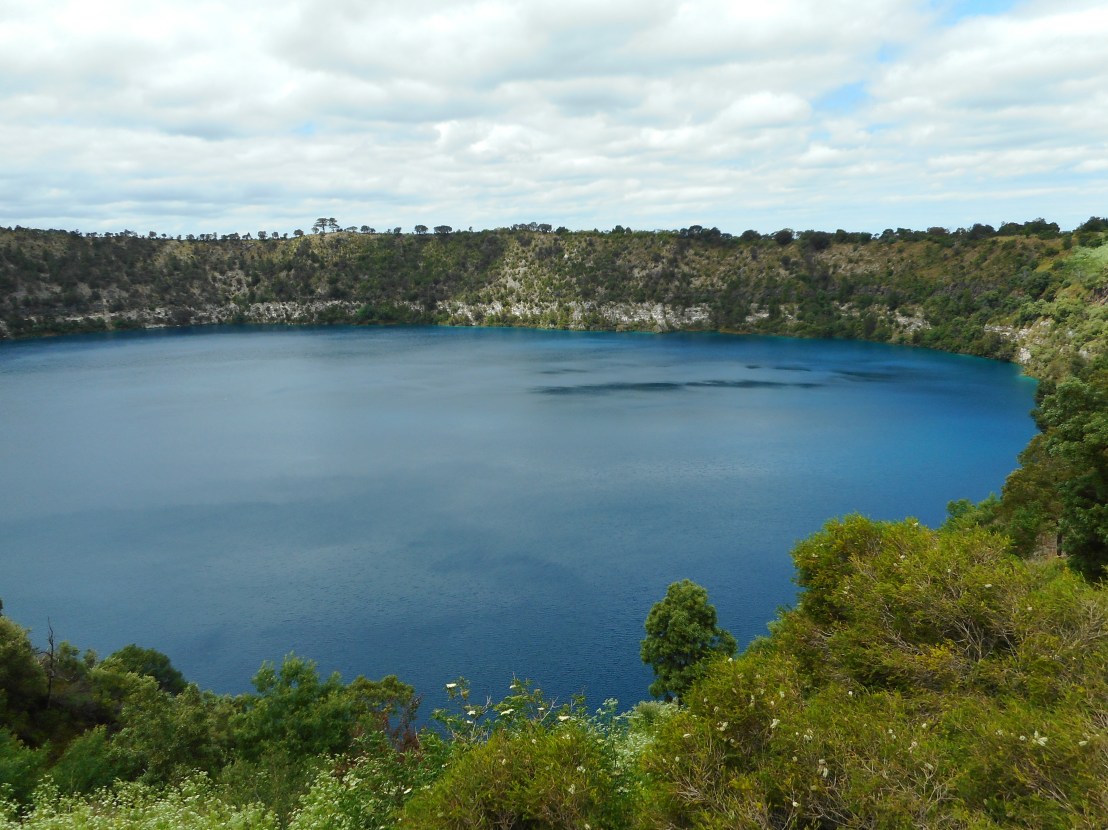
After another coffee I set off west from Port Fairy, towards Mt Gambier, the largest town on route, where I planned to post home a parcel of stuff I no longer needed here, to avoid exceeding the weight allowance on the flight home.  The main road to Mt Gambier was the A1!  In Mt Gambier I went to the Post Office and sorted out the parcel and then had an excellent ristretto at a local coffee hop.  I briefly visited the town’s most famous landmark, the Blue Lake.DSCN0580.JPG

which was, really, astonishingly blue.  The lake was formed by a volcanic eruption and the clear shape of the crater can be seen.

From Mt Gambier I headed north, through quite attractive woodland, before arriving at Penola, the main town in the Coonawarra.  Coonawarra is know for its red soil or terra rossa and for the cabernet sauvignon it produces.

Lorna and I first got into wine soon after we met and I remembered the Australian Wine Centre on the Strand, where I had bought many a bottle.  One of our favourites had been a Chardonnay produced by Penley Estates.  Sadly the AWC had closed and Penley Estates wines are no longer available in the UK.  When I noted that Penley Estates were in the Coonawarra I resolved to visit their cellar door.DSCN0581.JPG

Sadly, the Chardonnay, which I remembered as a rich, generous, very Australian Chardonnay had become leaner and more classical.  Their cabernets, however, were very good and they had “museum” releases of older wines available at very reasonable prices.

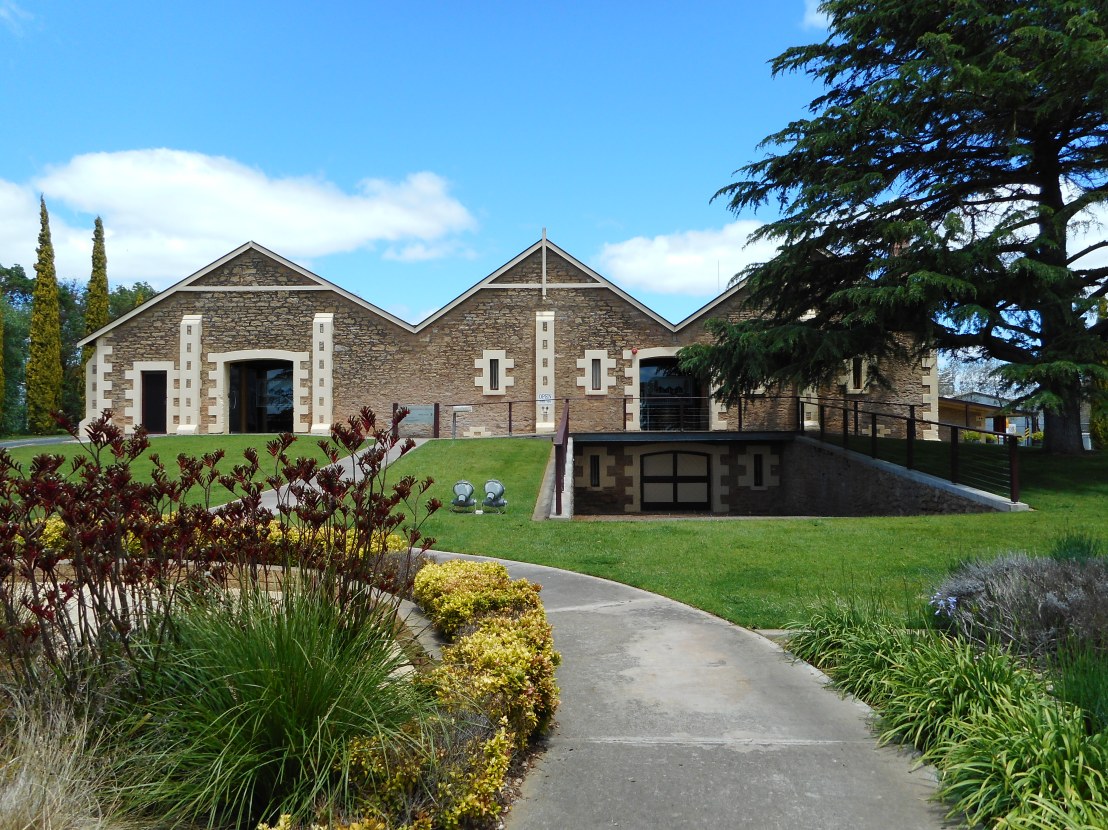
I moved on to one of the Coonawarra’s best known producers, Wynn’sDSCN0584.JPG

where I tried three of their cabernets.

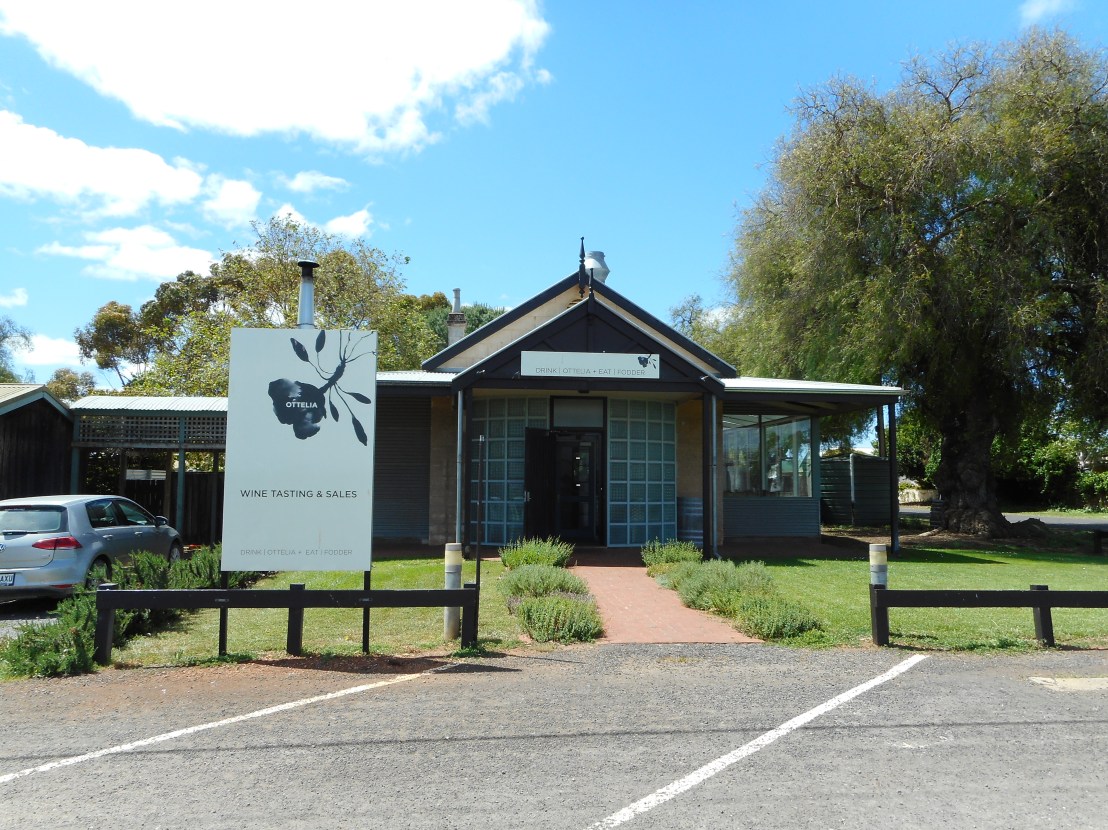
By now I was hungry and I stopped at Ottelia,DSCN0587.JPG

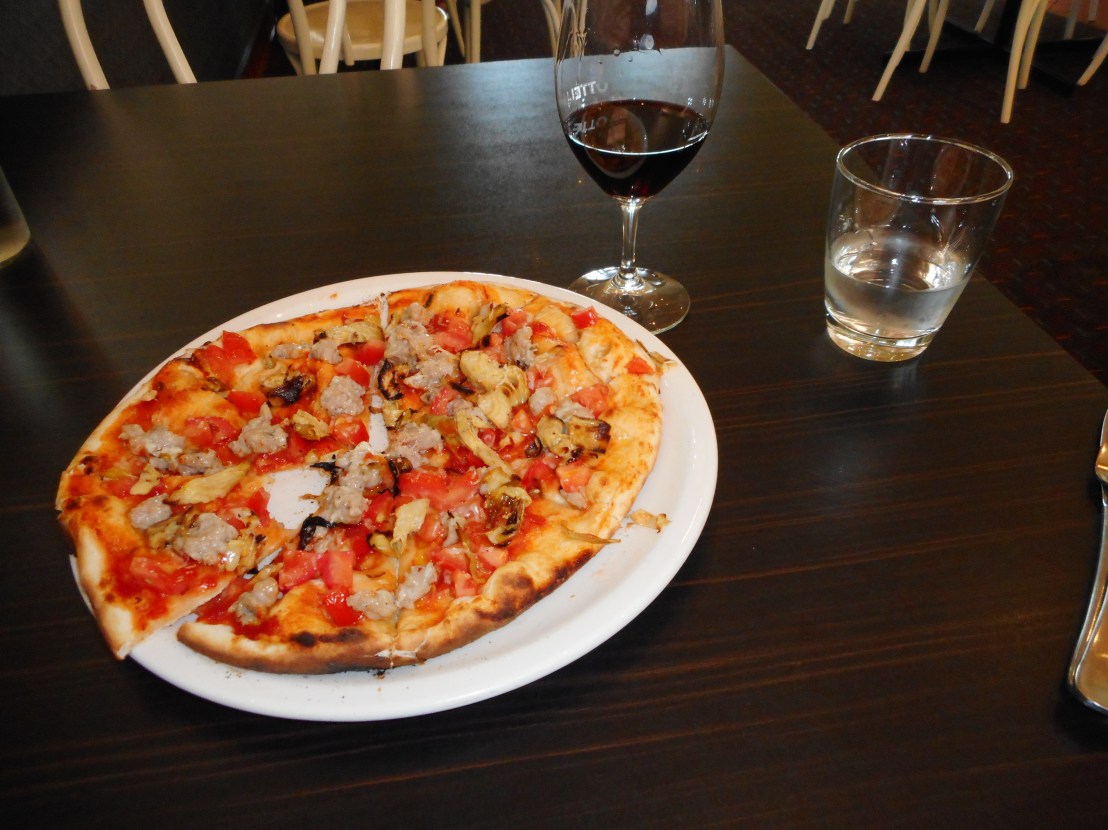
whose cellar door also sells excellent wood fired pizzaDSCN0586.JPG

which went very well with a glass of their very pleasant cabernet.

After lunch I headed on towards Adelaide, through initially flat land, before coming in to the very attractive Adelaide Hills.  In Adelaide I’m staying with James and his wife and once I had brought stuff in from the car we headed out for a very pleasant supper.  I had a rather good crab linguine.  No pictures, I’m afraid, I didn’t take my camera.  James and I walked on to get an ice cream and then returned to his house.  On the drive up I had been listening to the first day of the day/night test between Australia and South Africa in Adelaide, which I would be attending on Friday.  We got back from dinner to find that South Africa had declared on 259-9 in  order to have a bowl under lights as the Australians.  The two Aussie openers Renshaw (on debut and English by birth )and Khawaja resisted stubbornly, to leave the game well poised for tomorrow.